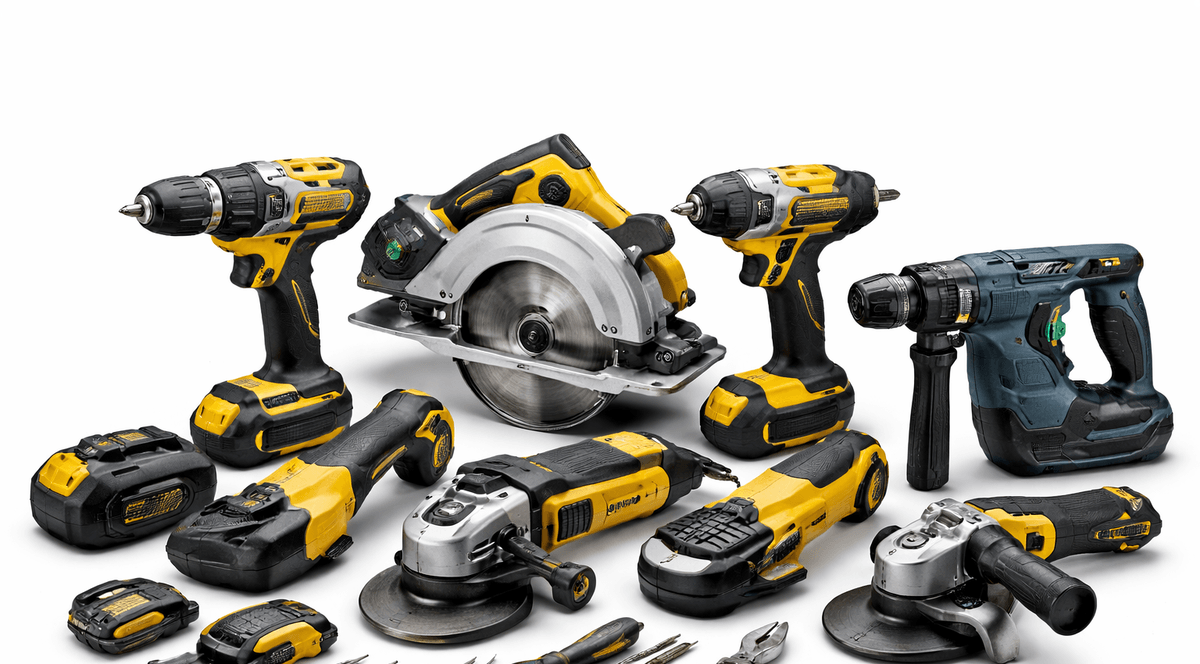
The modern construction landscape & metal fabrication has changed significantly over the past decade. Where power tool selection was once limited by access to outlets and extension cords, today’s cordless systems deliver performance that often matches or surpasses traditional corded equipment. With advancing battery platforms and improved motor efficiency, users now have more flexibility without sacrificing output or reliability. For professionals and serious enthusiasts in the United States, Australia, and New Zealand, the real challenge is no longer simply finding a tool that works. The focus has shifted toward understanding How to Choose the Right Power Tools for Your Job within an expanding ecosystem of brands, battery platforms, and performance tiers.
Selecting the right combination of power source, torque capability, runtime, and durability directly affects productivity, safety, and long-term return on investment.
Choosing the right power tool for construction or metal fabrication is a strategic decision. Whether you are outfitting a commercial crew in Sydney, managing a residential build in Auckland, or tackling a renovation in Chicago, the principles of selection remain consistent.
This guide provides a deep dive into the technical specifications, regional standards, and ergonomic considerations necessary to build a high-performance toolkit.
How to Choose the Right Power Tools for Your Job: A Professional’s Strategic Guide
-
Defining the Scope: DIY vs. Trade Grade
The first step in tool selection is an honest assessment of the “duty cycle.” In the tool industry, brands are generally categorized into tiers.
- Entry-Level/DIY (Consumer): These tools are designed for occasional use. They are lighter and more affordable but lack the heat management required for continuous operation.
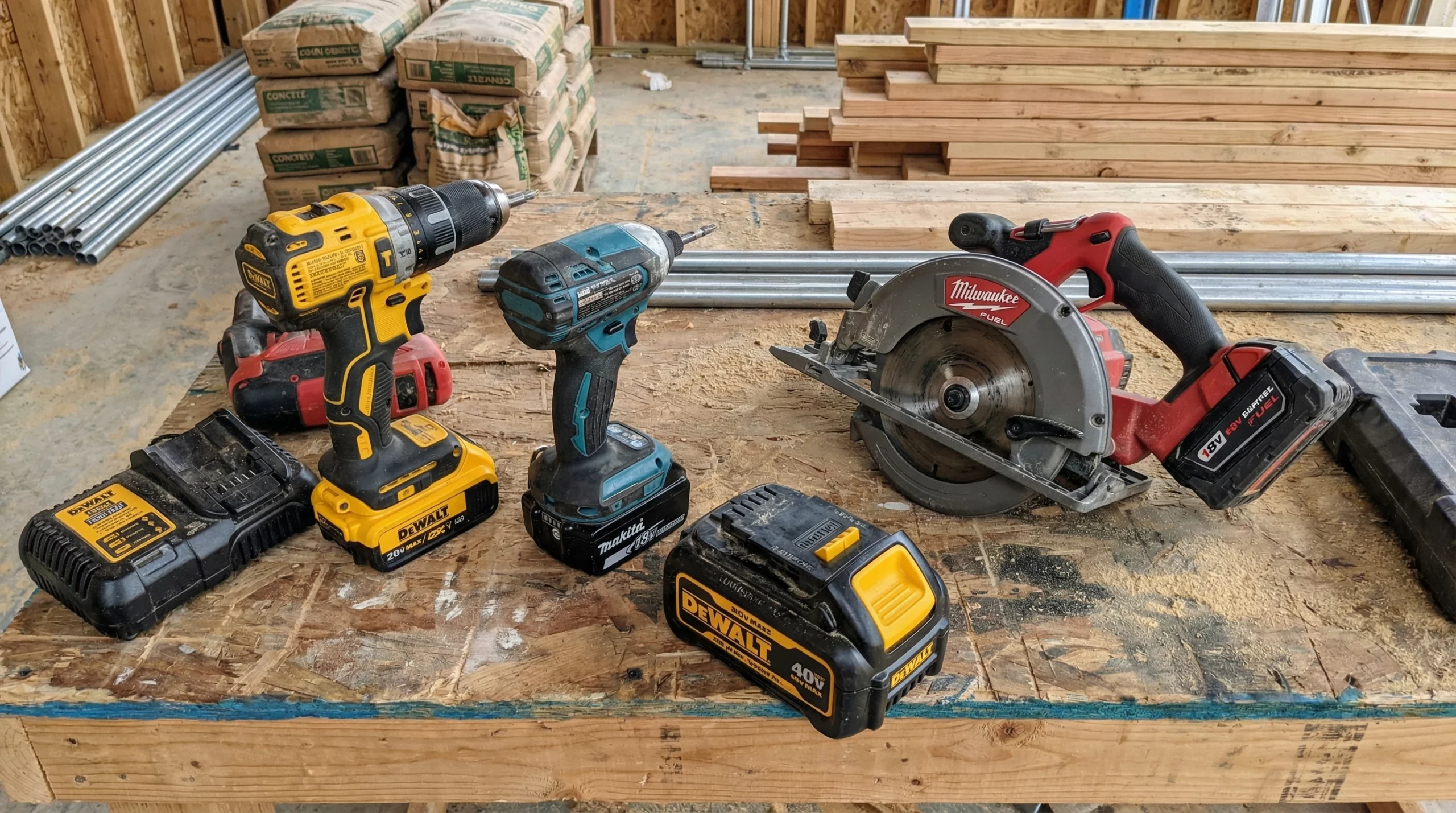
- Professional/Trade Grade: This is the “sweet spot” for most users. Brands like Milwaukee, Makita, and DeWalt dominate this space globally. These tools feature reinforced housings, high-torque motors, and advanced electronics designed for 8-hour workdays.
- High-End/Industrial: European manufacturers like Hilti (Liechtenstein) and Festool (Germany) represent the pinnacle of engineering. These tools are often specialized for extreme durability or surgical precision and frequently include superior dust extraction systems that meet stringent EU health regulations.
-
The Battery Ecosystem: Choosing Your “Platform”
In the cordless era, you aren’t just buying a tool; you are buying into a battery platform. Once you own several 18V or 20V Max batteries, the cost of switching brands becomes prohibitive.
Voltage and Marketing Nuance
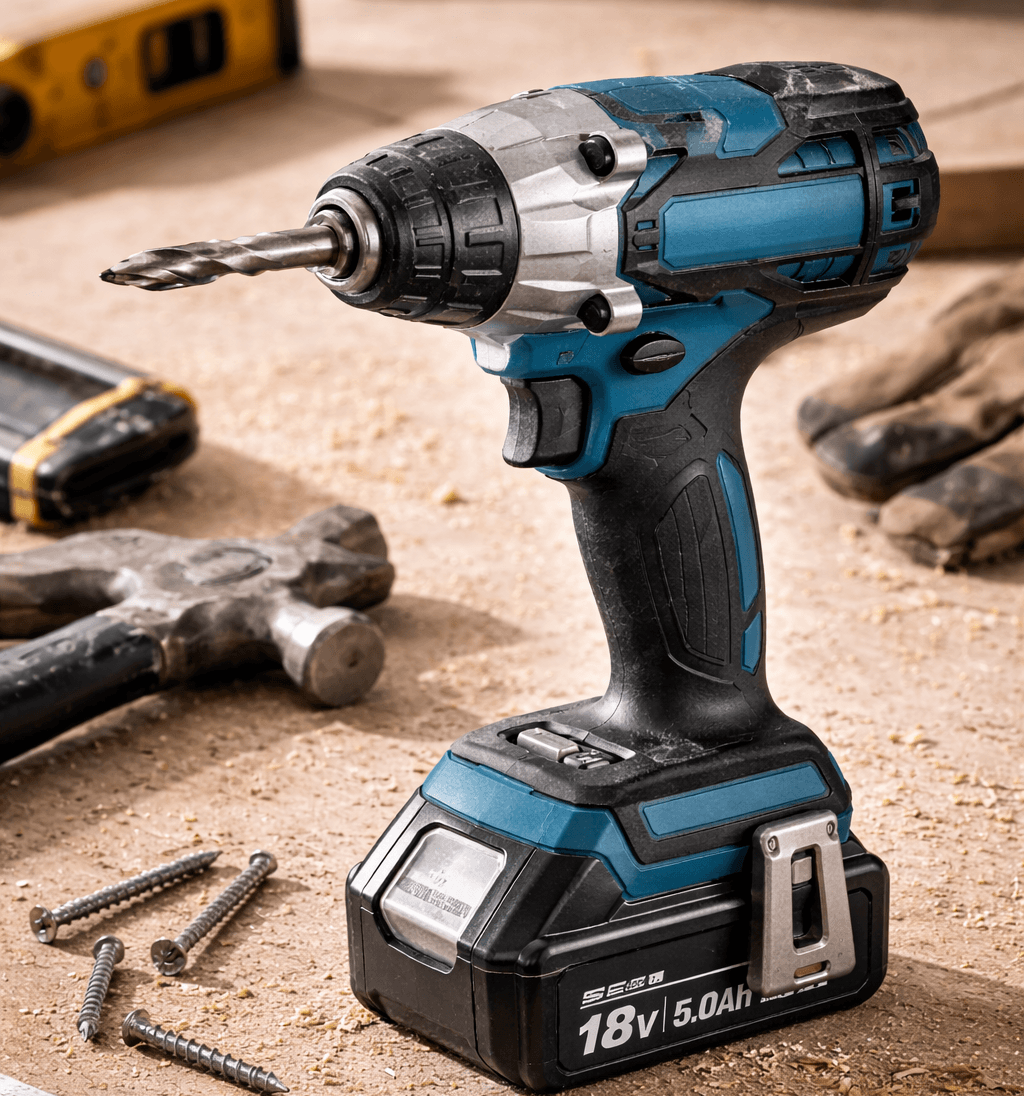
It is important to understand regional marketing. In the USA, many brands use the term “20V Max,” while in Australia, New Zealand, and Europe, the same tools are labeled “18V.” Technically, they are identical; 20V is the maximum initial battery voltage, while 18V is the nominal operating voltage.
For heavy-duty tasks such as ripping thick hardwoods or drilling into high-PSI concrete consider higher-voltage platforms. The 36V (or 40V Max) systems utilize two 18V batteries or a single larger cell to provide the “grunt” previously only found in petrol or corded tools.
-
Brushed vs. Brushless Motors: Why It Matters
When browsing tools, you will notice “Brushless” prominently displayed on the packaging. For a professional, this is a non-negotiable feature.
- Brushed Motors: Use carbon brushes to conduct electricity. These create friction and heat, leading to faster wear and lower efficiency.
- Brushless Motors: Use electronic controllers instead of physical brushes. This results in:
- Higher Efficiency: Up to 50% more runtime per charge.
- Greater Power: More torque in a smaller physical footprint.
- Longevity: No brushes to replace and less internal heat buildup.
For any tool that will see frequent use, such as an impact driver or circular saw, the higher upfront cost of a brushless motor is quickly recouped through productivity gains.
-
Ergonomics and Occupational Health
A tool may have the highest torque on the market, but if it causes fatigue or injury, it is a poor choice. Professionals in the USA and Australasia are increasingly focused on two key health metrics: Vibration and Weight.
- Vibration Control
Prolonged use of high-vibration tools can lead to Hand-Arm Vibration Syndrome (HAVS). European standards (specifically the Physical Agents Directive) have led the way in requiring manufacturers to reduce vibration. Look for “Active Vibration Control” (AVC) or “Anti-Vibration Technology” (AVT) features, particularly in reciprocating saws and rotary hammers.
- Weight and Balance
A tool’s “center of gravity” is as important as its total weight. When selecting a drill, test how it feels in your hand with the battery attached. A well-balanced tool reduces wrist strain, which is vital for overhead work or repetitive fastening tasks.
-
Tool-Specific Selection Criteria
- Drills and Impact Drivers
Every kit starts here. For most applications, a Sub-Compact 18V/20V set is ideal. They offer enough power for 90% of tasks but are small enough to fit into cabinetry or tight framing. However, if you are frequently drilling into masonry, a Hammer Drill (Combi Drill) with a dedicated concrete mode is essential.
- Cutting Tools
When choosing a circular saw, consider the “blade side.” In the USA, “Worm-Drive” saws (with the blade on the left) are popular for their visibility and torque.
In Australia and New Zealand, “Sidewinder” saws (blade on the right) are the traditional choice. Ensure the saw has an adjustable base plate made of magnesium or high-grade aluminum for durability.
- Dust Extraction (The “Silent” Requirement)
Globally, regulations regarding respirable crystalline silica (RCS) are tightening. In the USA, OSHA Table 1 provides strict guidelines. In Australia, recent bans on engineered stone have heightened awareness. When choosing power tools especially sanders and grinders ensure they are compatible with HEPA-rated dust extractors. A “tool-triggered” vacuum that starts automatically when the tool is turned on is a significant productivity booster.
-
Regional Compliance and Warranty
A common pitfall for beginners is “Grey Market” importing. While a tool might be cheaper to buy from a US website and ship to New Zealand, there are two major risks:
- Voltage Incompatibility: US chargers operate on 110V, while AU/NZ/EU operate on 230V/240V. Plugging a US charger into a Southern Hemisphere outlet without a heavy-duty transformer will destroy the electronics.
- Warranty: Most manufacturers do not honor international warranties. If your imported tool fails, you may find yourself without support.
Always look for tools that carry the RCM (Regulatory Compliance Mark) in Australia/NZ or the UL/ETL marks in the USA to ensure they meet local electrical safety standards.
-
The “Smart” Tool Trend
The latest frontier in power tools is Bluetooth connectivity (e.g., Milwaukee One-Key or DeWalt Tool Connect). These systems allow you to:
- Track Tools: GPS location via mesh networks.
- Customize Performance: Adjust torque and speed settings via a smartphone app.
- Inventory Management: Digital logging for large crews. While not necessary for everyone, these features provide immense value for site managers and companies tracking high-value assets.
Choosing the right power tools directly affects productivity, safety, and long-term operating cost on a construction site.
In my experience and from working with equipment specialists and contractors, the best tool choice always starts with understanding the task rather than the brand label or advertised power rating.
Cordless tools offer flexibility and fast mobility, making them ideal for framing, installation work, and general site tasks where access to power outlets may be limited. Corded tools provide consistent power delivery and are better suited for workshops or extended continuous operation where runtime consistency matters more than portability.
Matching the tool type to the working environment reduces fatigue and avoids unnecessary downtime.
Torque and speed control determine how well a tool handles different materials. High torque supports structural fastening and drilling into dense materials, while higher RPM allows cleaner cutting in softer materials.
Many users overlook clutch accuracy and gearbox quality, yet these directly affect fastener consistency and long-term tool durability. Stable torque delivery prevents stripping, cam-out, and premature motor stress.
In my experience and from reviewing manufacturer guidance, selecting the right power tool comes down to matching drill type, torque capability, speed control, and material suitability to the job, which aligns with professional selection criteria published by Hilti in their official drill buying guide.
Guide from Hilti : a leading global manufacturer of construction power tools emphasizes evaluating drill type, torque, speed control, and material suitability when selecting the right power drill for construction tasks
Battery platform compatibility influences total ownership cost. Selecting tools that share batteries reduces charging equipment, simplifies storage, and lowers replacement expenses.
Runtime expectations should align with shift length and charging availability to avoid workflow interruptions.
Ergonomics also matter more than many beginners expect. Grip comfort, vibration control, balance, and trigger response influence accuracy and fatigue over long shifts. A tool that feels stable in the hand often delivers better productivity than a heavier, higher-rated model.
Selecting power tools based on real job demands, operator comfort, and duty cycle usually delivers better reliability and value than chasing maximum specifications alone.
Conclusion: Investment over Expense
Choosing the right power tools requires a shift in perspective: view your tools as an investment in your own efficiency and physical health. Prioritize brushless motors, commit to a reputable battery platform that offers a wide range of future tools, and never compromise on safety features like dust extraction and vibration control.
By aligning your choices with the technical standards of your region whether it be the rigorous testing of ANSI in the States or the AS/NZS standards in the Pacific you ensure that your toolkit is not just a collection of gadgets, but a professional-grade system built to perform.
Frequently Asked Questions: Choosing the Right Power Tools
- What is the real difference between 18V and 20V Max power tools?
Technically, there is no difference in power. “20V Max” is a marketing term used primarily in the USA to describe the battery’s maximum initial voltage. “18V” is the nominal operating voltage used in Australia, New Zealand, and Europe. Both labels typically refer to the exact same battery cells and tool performance. - Is it worth the extra investment to buy brushless power tools?
Yes. Brushless motors use electronic controllers instead of carbon brushes, resulting in up to 50% longer runtime per charge, more torque, and a longer tool lifespan. For professional use or frequent DIY projects, the increased efficiency and reduced maintenance quickly justify the higher upfront cost. - Can I use batteries from one brand (e.g., Milwaukee) on another brand’s tool (e.g., Makita)?
No. Manufacturers use proprietary mounts to lock users into their specific battery ecosystem. While third-party “battery adapters” are available online, they often void your warranty and can interfere with the tool’s thermal protection sensors, potentially damaging the battery or the tool. - When should I choose a corded tool over a cordless one?
While cordless tools are now the industry standard for mobility, corded tools are still preferred for stationary, high-demand tasks. Heavy-duty table saws, large demolition hammers, and bench grinders benefit from the unlimited, consistent power supply of a wall outlet without the need to swap expensive batteries. - Are power tools purchased in the USA compatible with power in Australia or New Zealand?
The tools themselves (cordless) will work fine, but the chargers are not compatible. The USA operates on 110V/120V, while Australia and New Zealand use 230V/240V. Using a US charger in a Southern Hemisphere outlet will destroy the unit. Additionally, most manufacturers do not provide warranty support for “grey market” imports.
Technical and International Standard References
- IEC 62841-1: Electric motor-operated hand-held tools, transportable tools and lawn and garden machinery – Safety: This is the primary international standard (adopted globally) that specifies the general safety requirements for all electric motor-operated tools. It covers electrical, mechanical, and thermal hazards.
- ANSI/ASA S2.70-2006 (R2020): Guide for the Measurement and Evaluation of Human Exposure to Vibration Transmitted to the Hand: This American National Standard provides the methodology for measuring vibration in power tools, a critical reference for preventing long-term physical injury (HAVS) in the construction industry.
- AS/NZS 62841.1:2015 (Adoption of IEC 62841-1): This is the specific Australia and New Zealand standard that ensures power tools sold in these markets meet the necessary safety and performance criteria for their unique electrical environments and workplace safety laws.
- Hilti-Drill Buying Guide (Professional Power Tool Selection)
- Bosch Professional-Cordless Drills Drill Guide: Official guidance on selecting a cordless drill with respect to voltage, speed settings, torque, battery capacity, and ergonomics.
To keep your learning momentum going, check out the next recommended article it connects perfectly with what you’ve just read :
- What Tools Every Construction Beginner Should Own
- Extend the Life of Your Tools: Proven Maintenance Tips for Drills, Saws & Grinders
Editorial Disclaimer
This article is for educational purposes only, and readers should always refer to the manufacturer’s official specifications and safety guidelines for exact application requirements.