Tool manuals and safety labels contain critical operating information that many users overlook.
In my experience and from working with equipment trainers and service technicians, improper setup and misuse often trace back to skipped documentation rather than mechanical faults.
Specification sections
Explain voltage, power input, speed ranges, and accessory compatibility. Understanding these limits prevents overloading and premature wear. Duty cycle notes indicate how long a tool can operate continuously before cooling is required, which directly affects longevity.
Safety symbols
Highlights hazards such as electrical shock, rotating parts, hot surfaces, and dust exposure. Color coding and standardized pictograms provide quick visual warnings that apply across many manufacturers. Paying attention to these markings improves hazard awareness and decision-making.
Certification markings
Verify’s compliance with safety and electrical standards. Marks such as UL, CE, or regional compliance symbols indicate that tools meet regulatory requirements for insulation, grounding, and construction quality. These markings also assist with workplace compliance audits and insurance requirements.
Maintenance sections
Outline’s cleaning intervals, lubrication guidance, and inspection procedures. Following these recommendations reduces unexpected failures and warranty disputes. Storage guidelines protect tools from moisture and impact damage.
Accessory compatibility notes prevent improper bit or disc selection that could cause vibration, kickback, or tool damage. Using approved accessories improves safety and performance consistency.
Reading manuals once at setup and reviewing key labels periodically reinforces safe operation habits and protects equipment investment over time.This guide explains how to interpret safety label categories, recognize common symbols, find the technical information that matters, and use manuals as a practical safety and maintenance system.
Mastering Equipment Documentation: A Professional Guide to Tool Manuals and Safety Labels
Power tools and workshop machines are built to work hard, but they can also cause serious injury when used incorrectly. That is why tool manuals and safety labels exist. They are not “extra paperwork” or something to ignore after unboxing. They are the manufacturer’s instructions for safe operation, correct setup, and proper maintenance. Understanding tool manuals and safety labels helps reduce accidents, prevents premature tool failure, and improves performance on real job sites and in workshops.
Why Tool Manuals and Safety Labels Matter
A modern power tool is a combination of electrical, mechanical, and thermal systems. Even simple-looking tools can contain high-speed rotating parts, heat-producing motors, and sharp cutting surfaces. Safety labels provide quick warnings at the point of use, while the manual gives the full operating rules and technical limits. Together, they answer critical questions:
- What is the tool designed to do (and not do)?
- What hazards exist during normal use?
- What PPE is required for safe operation?
- What speed, load, and runtime limits should be followed?
- What maintenance is required to keep the tool safe?
When tools are used outside the manual’s limits wrong speed, wrong attachment, wrong power supply—failures and injuries are much more likely. The goal is not to memorize every page, but to know where the important information is, and how to use it.
1) The Anatomy of a Modern Safety Label
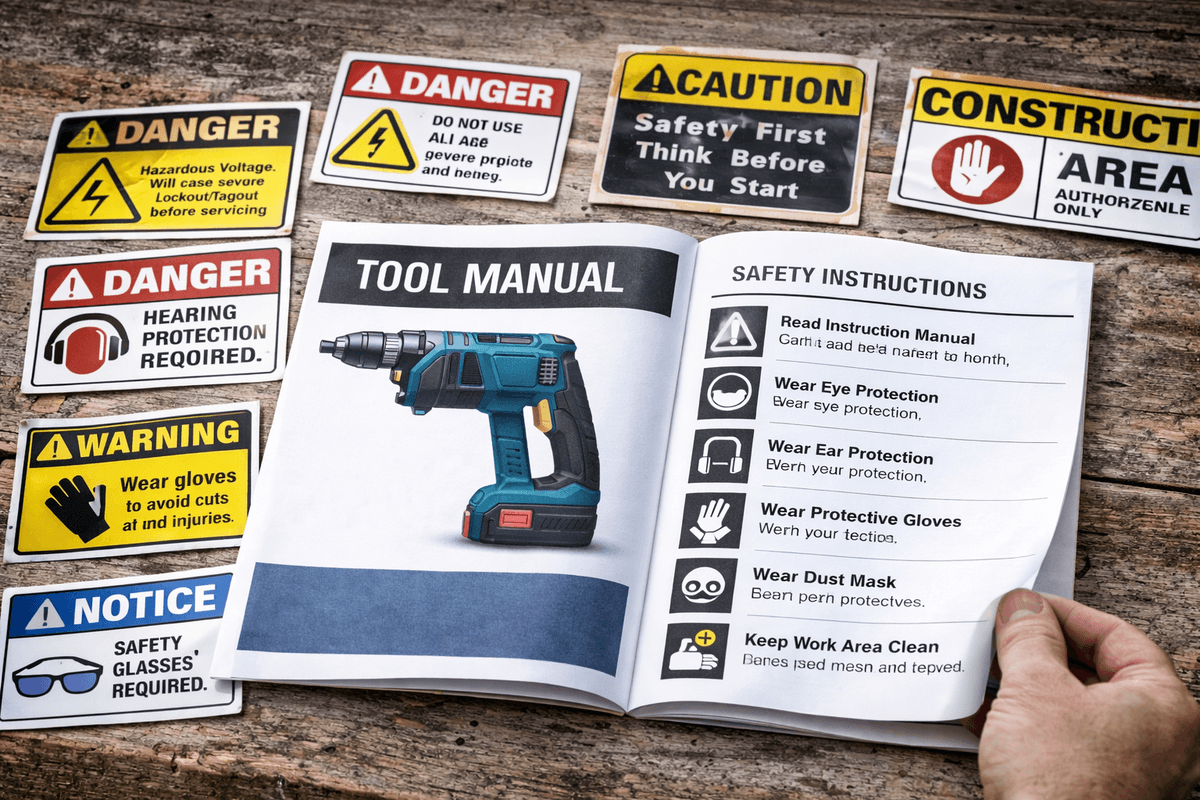
Safety labels use a recognized hierarchy. The color and signal word tell you how serious the hazard is. Most labels follow a similar structure: a signal word, a hazard description, the possible consequence, and the required action.
Common signal words you will see
DANGER (Red)
Indicates an immediate hazard that can cause death or serious injury if not avoided. These are often used near exposed rotating parts, blades, pinch points, or electrical shock risks.
WARNING (Orange)
Indicates a potentially hazardous situation that could cause death or serious injury. These often relate to improper use (incorrect attachments, unsafe positioning, missing guards) or high-energy hazards such as kickback.
CAUTION (Yellow)
Indicates a hazard that may cause minor or moderate injury, but it should never be treated as “low importance.” Many caution labels relate to heat warnings, sharp edges, safe handling, and maintenance points. Ignoring them commonly leads to damaged parts, poor performance, or unsafe tool conditions over time.
A practical approach is to treat all labels as instructions, not suggestions. The color simply indicates the severity of the outcome if the label is ignored.
2) Decoding Universal Symbols
Because tools are sold globally, labels often rely on symbols instead of long text. Learning a few common symbols improves safety instantly, especially when using imported machines or older equipment.
Key symbol groups
Mandatory action symbols (often blue circles)
These show what must be done, such as wearing eye protection, hearing protection, or a respirator.
Prohibition symbols (often red circles with a diagonal slash)
These show what must not be done, such as removing guards, operating without PPE, or using the tool near water.
Information symbols
One of the most important is the “Read Manual” symbol, usually shown as an open book. This symbol is a clear warning that the tool has critical rules not obvious from appearance alone. Examples include:
- a reverse-threaded arbor
- specific guard requirements
- a maximum accessory diameter
- a required break-in or inspection process
Treat symbols as quick reminders and use the manual to understand the full instructions behind them.
3) Finding the “Hidden” Specs in Manuals
Many people glance at the tool body, see a voltage rating or a speed range, and assume that is enough. But the manual often contains important limits that are not printed on the tool itself.
Specifications worth checking every time
Maximum rated RPM
This is critical for grinders, rotary tools, cutting wheels, and any accessory-driven tool. Accessories must be rated above the tool’s maximum speed. Running an underspeed-rated disc can lead to catastrophic failure.
Duty cycle / runtime guidance
Some tools are designed for intermittent use and will overheat under continuous load. Manuals may specify a duty cycle or recommended cooling periods.
Voltage tolerance and extension cord requirements
For corded tools, long extension cords can cause voltage drop. The manual often specifies the correct wire gauge for different cord lengths. Using the wrong cord can reduce power and increase heat, which can shorten motor life.
Accessory compatibility
Manuals typically list:
- compatible accessories
- correct mounting procedures
- allowable sizes
- safe guard configurations
This matters because “it fits” does not mean “it’s safe.”
4) Hazard Communication and PPE Integration
Safety labels and manuals often include noise, vibration, dust, flying debris, and chemical exposure warnings. These directly connect to PPE selection. A good approach is to match the label warning to the correct control:
- Flying chips or sparks → eye protection and face protection if required
- Dust or fumes → appropriate respiratory protection
- High noise → hearing protection
- Vibration exposure → limit duration and use vibration-control practices
- Hot surfaces → gloves and safe handling procedures
If a label implies higher risk such as “double eye protection” it means standard glasses alone may not be sufficient in that operating condition. The manual usually clarifies what protection level is intended and when.
5) The Maintenance Schedule: A Safety System
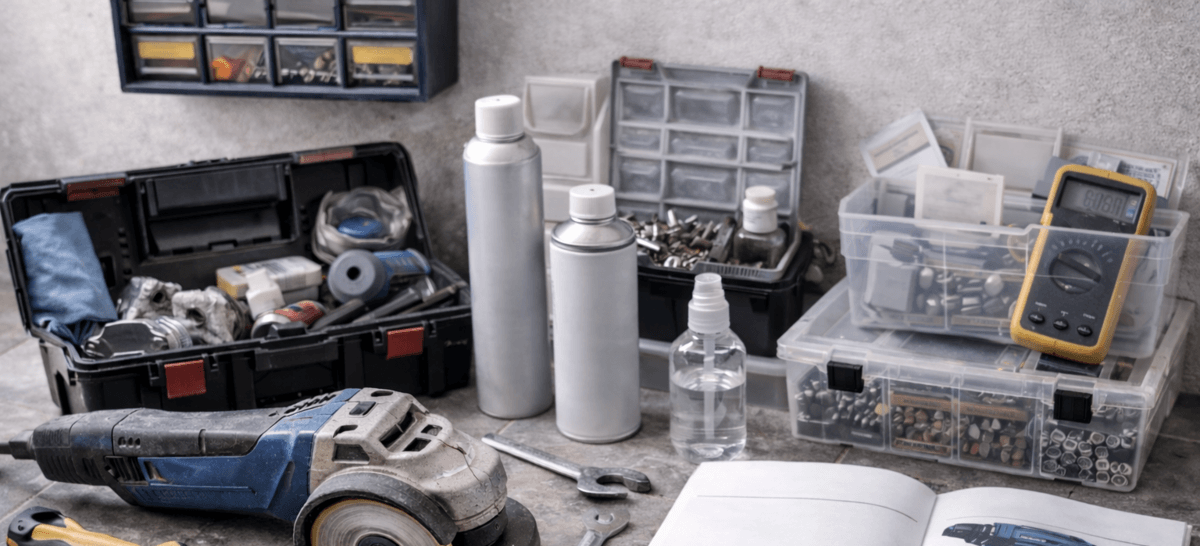
Manuals are not only about operation they are also maintenance plans. Maintenance is a major safety issue because worn parts increase risk. Loose guards, damaged cords, worn bearings, and clogged ventilation pathways can turn a safe tool into a hazard.
What to look for in the maintenance section
- inspection intervals (daily, weekly, monthly)
- lubrication points and lubricant type
- brush inspection or replacement guidance (for brushed motors)
- filter cleaning or replacement
- torque settings for critical fasteners
- storage requirements (especially batteries and accessories)
Following maintenance instructions also protects tool life and reduces downtime. A well-maintained tool runs cooler, performs better, and stays safer over time.
Practical Use: How to Apply This on Real Jobs
A simple professional habit is to build a “manual and label workflow”:
- Before first use, read the safety section and identify maximum speed and accessory rules.
- Confirm required PPE and any special hazards (kickback, pinch points, dust).
- Set up the tool using the manual (guards, accessories, torque settings).
- Follow recommended maintenance intervals and keep basic records.
- Re-check the manual when changing applications or using new accessories.
This turns manuals and labels into an everyday tool, not something that sits in a drawer.
Conclusion
Tool manuals and safety labels are the fastest way to reduce injury risk and avoid costly tool damage. They explain hazards clearly, define operating limits, and provide maintenance schedules that protect both the operator and the equipment. Learning the meaning of signal words, recognizing common symbols, and checking key specifications like maximum RPM, duty cycle, and extension cord requirements can prevent the most common site mistakes. Over time, using tool manuals and safety labels properly creates a safer, more reliable, and more professional workshop or jobsite.
Sources & Further Reading
- ANSI/ASSE A10.34 – Construction Tool Inspection & Use Standard
- OSHA 3080 – Hand and Power Tools Safety Guidance
- Safe Work Australia – PPE and Tool Safety Guidance
- WorkSafe New Zealand – Personal Protective Equipment & Safety Label Guidance
- NIOSH – Safety Labeling and Hazard Communication Research
To keep your learning momentum going, check out the next recommended article it connects perfectly with what you’ve just read.
Editorial Disclaimer
This article is for educational purposes only, and readers should always refer to the manufacturer’s official specifications and safety guidelines for exact application requirements.