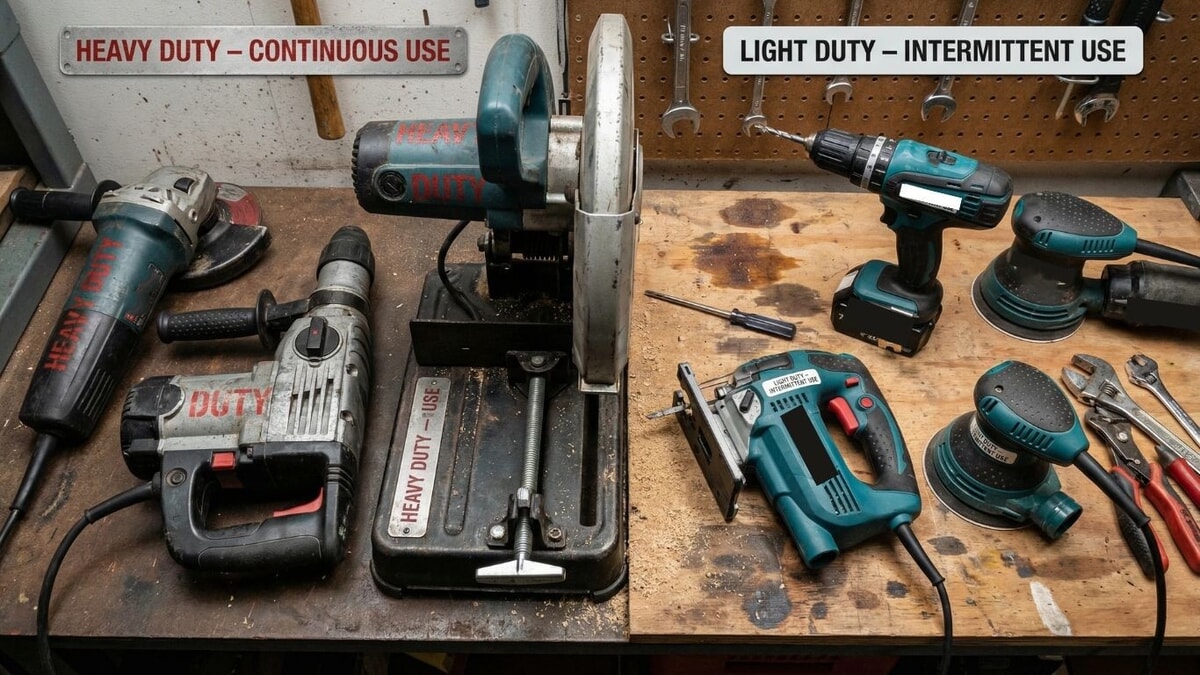
Understanding the difference between continuous use and intermittent use power tools is really important for anyone working in construction, carpentry, metalwork, or with DIY projects. The type of tool you choose affects not just performance and durability but also work efficiency and workplace safety. In this article, I am getting into continuous vs intermittent use power tools, covering their main differences, how to choose between them, and why using the right tool for the job matters.
What Are Continuous Use and Intermittent Use Power Tools?
The distinction between continuous use and intermittent use power tools is based on how long a tool is expected to operate safely and efficiently without rest. Continuous use power tools are built to run for extended periods, often in industrial or commercial environments. Intermittent use power tools are designed for shorter, less demanding tasks, with regular breaks built into their operation cycles.
For example, a heavy duty angle grinder in a metalworking shop might be turned on for hours straight each day. That falls squarely into the continuous use category.
By contrast, a small home drill that runs for a few minutes at a time to hang shelves only needs to withstand intermittent use.
Key Differences Between Continuous and Intermittent Use
- Motor Type & Duty Cycle: Continuous use tools often have industrial grade motors, larger bearings, and components designed for sustained operation. Their duty cycles (period of use versus required rest) are longer. Intermittent tools are more compact, lighter, and are intended for shorter runs.
- Build Quality: Tools for continuous use usually feature more robust housing, better cooling systems, reinforced gears, and often a higher protection rating for dust or moisture. Intermittent use tools may use lighter, sometimes less durable materials.
- Price: Durable, continuous duty tools cost more upfront due to their higher grade materials and engineering. Intermittent use tools tend to be more budgetfriendly, making them attractive for home users or occasional light tasks.
- Intended Applications: Industrial, factory, or commercial site operations need continuous use tools for daily, long shifts. DIY users or technicians who only need a tool for specific short tasks are usually well served by intermittent use models.
Examples of Continuous and Intermittent Use Tools
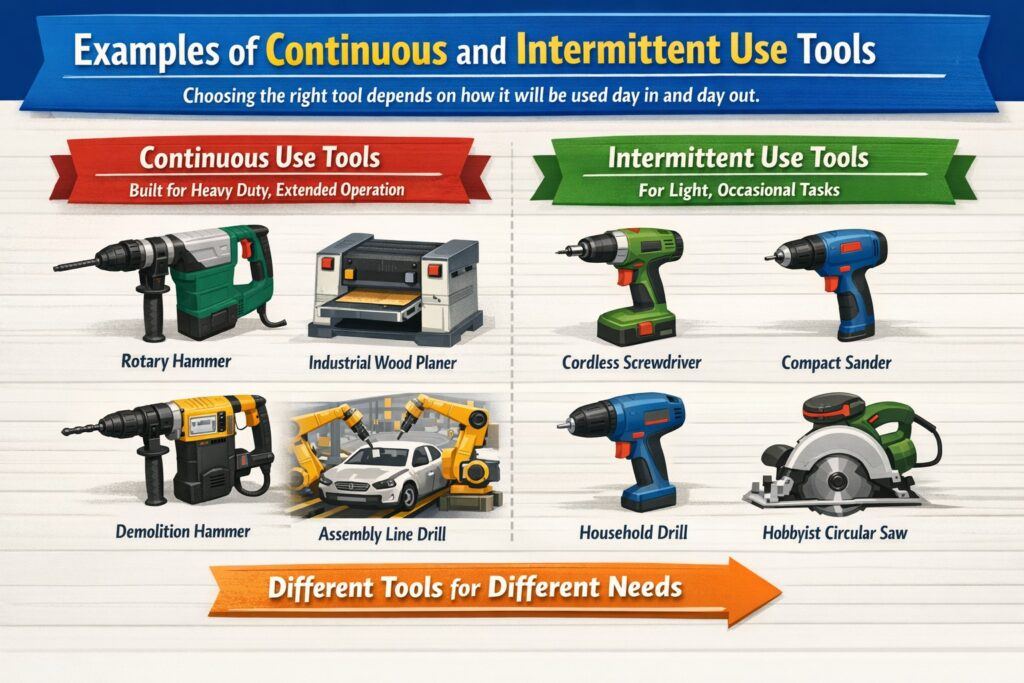
Many common power tools come in both categories, but their intended applications differ. Picking the right one depends on how the tool will be used day in and day out:
- Continuous Use Tools: Large corded rotary hammers, industrial wood planers, heavy duty demolition hammers, shop tools in a manufacturing line (for example, automotive assembly drills).
- Intermittent Use Tools: Cordless screwdrivers, compact sanders for woodwork, electric drills for household repairs, hobbyist level circular saws.
Tool manufacturers often specify a tool’s duty rating in user manuals or marketing material. For example, professional brands may tag their heavy duty lineup as “rated for continuous operation” or list actual percentages (like “S2 30 min,” meaning 30 minutes max run time before cooling is needed).
Duty Cycle Explained
Duty cycle expresses a tool’s safe run time versus rest time, usually given in percentage terms. For example, a duty cycle of 25% at a particular load means the tool should only be used for 15 minutes within a one hour period, followed by 45 minutes of off or cool down time. Continuous use equipment has higher or unlimited duty cycles. They can often be used as long as needed without pause, provided they’re not overloaded. This is a common standard in industrial settings, cutting down on downtime and wear.
If you push beyond the recommended duty cycle with an intermittent use tool, heat can build up inside the motor and internal parts, sometimes causing tripped thermal fuses or even permanent motor damage. Understanding your tool’s cycle helps prevent these issues and keeps your workflow on track. When choosing power tools for home vs professional use, keeping this distinction in mind will save money and frustration in the long run.
Why Using the Right Tool for the Job Matters
Choosing a tool matched to the task’s demands is super important for productivity, safety, and garage or site budgets. Here’s why:
- Safety: Using an intermittent duty drill motor in a task where it runs continuously can lead to overheating, early failure, or sudden shutoffs, risking accidents or injury.
- Equipment Longevity: Continuous use tools have features like advanced cooling fans, sealed bearings, and overload protection. Misusing a lighter duty tool can cause expensive breakdowns and costly downtime.
- Project Efficiency: Commercial work that stops while waiting for a tool to cool adds up to lost time and delayed projects. The right tool keeps the job moving without stops.
How to Choose the Right Tool for Your Use Case
Selecting between continuous and intermittent use tools comes down to a few practical questions:
- What type of projects do you tackle most often? If demanding, lengthy tasks are everyday work (like concrete demolition, long sanding projects, or big installations), continuous duty is the safer bet.
- How long does each tool run at a time? Add up the typical use cycle, including consecutive jobs or shifts, and compare that with the tool’s duty rating before buying.
- What’s the jobsite environment? Industrial, dusty, or wet places require extra protection and longevity, features typically found in continuous use tools.
- What is your budget and how often will the tool be used? Sometimes owning a mix, one or two continuous duty tools plus several lower cost intermittent ones, is the right balance.
Careful research helps buyers make informed decisions and avoid frustration later on. Try to look for real world feedback from users who have similar use patterns.
Manufacturer support and warranty terms can also help guide the decision.
It’s also worth considering tool versatility. Some projects might require switching between drilling, sanding, and cutting, so think about tools that can cover several jobs if your usage is more general or infrequent.
For professionals, investing in specialized continuous use tools will pay off through reliability and performance over the years.
Maintenance Differences to Remember
Tool longevity relies on proper maintenance. Continuous use tools, even though they’re built to last, benefit from timely care. This includes regular lubrication, cooling vent cleaning, and periodic checks of brushes or bearings.
Intermittent use tools also need upkeep, but the service intervals are longer, reflecting their lighter workload. Skipping maintenance for either type raises the risk of breakdowns and shortens working life. It pays to stick to schedules recommended by the manufacturer.
For both types, always inspect for signs of wear or overheating. Keep cords and batteries in good shape, store tools in dry, safe places, and follow all cleaning instructions.
Consistent maintenance makes sure your equipment remains reliable and safe each time you pick it up.
FAQ: Common Questions About Continuous vs Intermittent Use Power Tools
- Can I use an intermittent use tool for a continuous task in an emergency?
It is possible, but it is not recommended. Intermittent tools may overheat, lose performance, or suffer permanent damage if pushed beyond their limits. If you must, give the tool extra rest and watch for any signs of stress. - Is there a way to upgrade intermittent use tools to continuous use?
No, these are built differently from the inside out, from motor windings to housings and electronics, so no upgrade can safely bridge the gap. - How do I tell if my tool is continuous or intermittent duty?
Check the owner’s manual, product labeling, or manufacturer website. Look for terms like “continuous duty,” “heavy duty,” or references to specific duty cycle percentages. - Do battery powered (cordless) tools fit either category?
Many cordless tools are designed for intermittent use due to battery capacity and heat generation, but some professional models are rated for extended or semicontinuous operation. Always check specs and run time guidance.
Practical Use Cases for Each Tool Type
- Continuous Use Tool Application: In a production carpentry setup, a table saw might run all day ripping boards. The motor, bearings, and electrical systems are engineered for this constant demand.
- Intermittent Use Tool Application: A home user mounts curtain rods in several rooms across a weekend, drilling a hole or two in each. An entry level cordless drill meets this kind of need without issue.
Manufacturers realize that users have these different requirements. That’s why two tools that look almost identical on the shelf can have big differences inside, ones that affect safety, function, and lifetime costs for owners. Knowing what to look for sets you up for safer, smoother projects every time.
If you work in environments where tool sharing is common, label each tool for its duty cycle to avoid accidental strain. For larger teams, create a quick reference guide so everyone can check which tool to grab, keeping downtime and repairs to a minimum.
Next Recommended Article
What Makes Power Tools Powerful? How Electricity Converts into Mechanical Performance
References
- International Electrotechnical Commission (IEC 60745): Handheld motor operated electric tools, Safety.
2. Occupational Safety and Health Administration (OSHA) – “Hand and Power Tools” Standards and Guidelines, U.S. Department of Labor – www.osha.gov
3. Machinery’s Handbook, 31st Edition. Industrial Press.
Editorial Disclaimer
This article is for educational purposes only, and readers should always refer to the manufacturer’s official specifications and safety guidelines for exact application requirements.