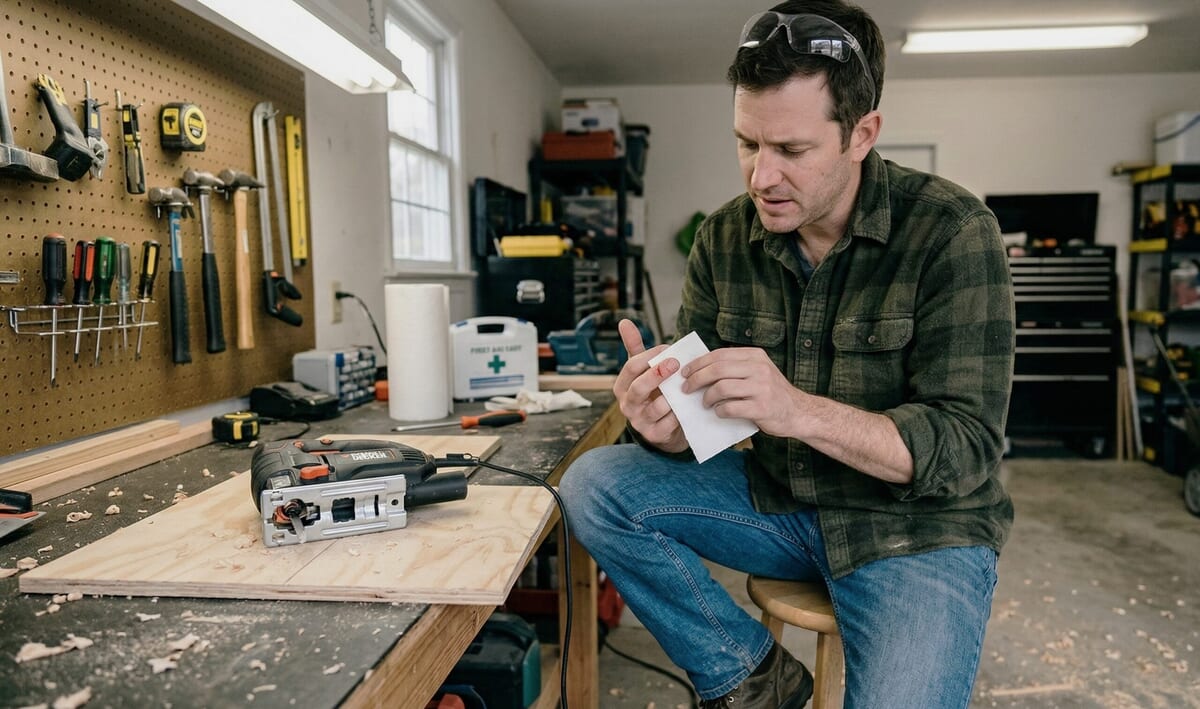
Power tools are indispensable on job sites, in professional workshops, and for residential maintenance, offering significant advantages in efficiency and professional-grade results. However, they also present substantial safety risks that can lead to severe physical harm. Understanding how power tool accidents actually happen is essential for both novices and experienced professionals, as these incidents often occur instantaneously during routine tasks. Data from safety organizations like OSHA in the United States, alongside Safe Work Australia and similar regulatory bodies in New Zealand and Europe, indicates that a lapse in vigilance or a minor mechanical failure is often all it takes for a standard project to become a medical emergency.
While it is a common misconception that only beginners are at risk, statistics suggest that seasoned veterans are frequently involved in incidents due to complacency. This article explores the mechanics of tool-related injuries, the root causes of failure, and the proactive measures necessary to maintain a safe working environment.
Understanding the Basics: Common Types of Power Tool Accidents
Accidents involving high-velocity machinery are rarely predictable. They often manifest in a split second, leaving the operator with little time to react. Recognizing the specific mechanics of power tool accidents allows for better risk assessment before a trigger is even pulled.
-
Kickbacks
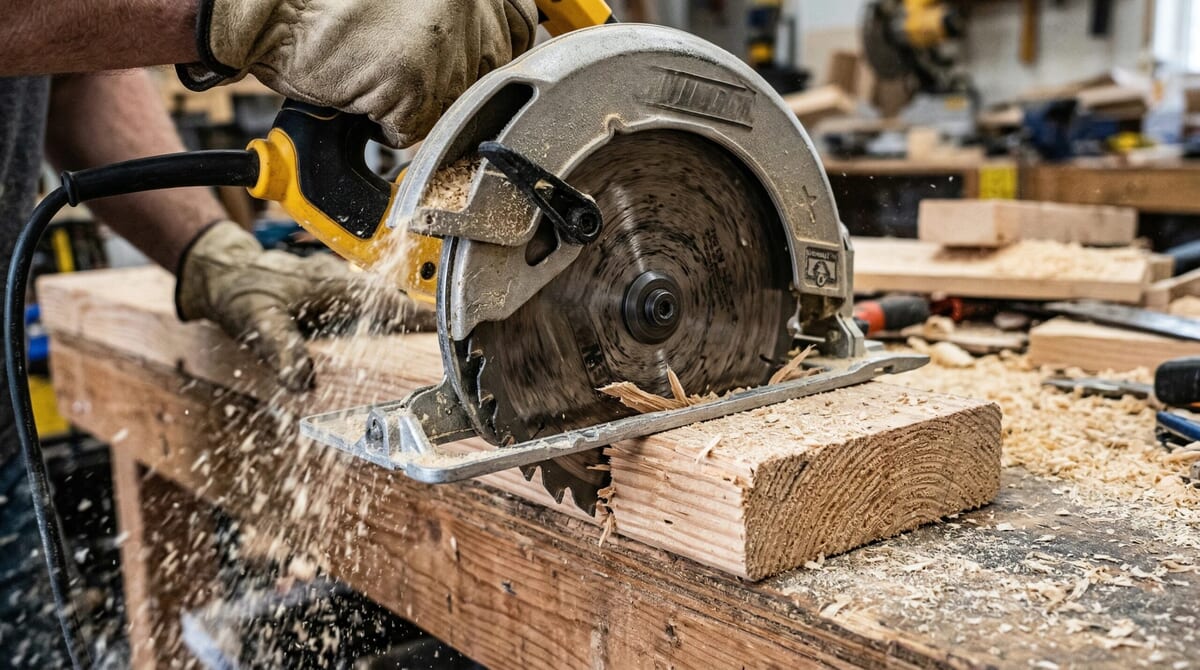
Kickback is one of the most violent and common incidents involving circular saws, table saws, and grinders. It occurs when the cutting blade binds in the material or strikes an unexpected obstruction, such as a knot in timber or a nail. The energy of the motor is then transferred from the blade to the tool itself, causing the machine to jerk violently back toward the operator.
-
Lacerations and Punctures
The primary function of most power tools is to cut, grind, or pierce tough materials. Consequently, human skin and bone offer very little resistance to these forces. Lacerations often occur during the “wind-down” period after a tool is turned off but while the blade is still spinning, or when a hand is placed too close to the cutting path to steady a workpiece.
-
Electric Shock
Electrical injuries are prevalent on construction sites where tools are exposed to the elements. Frayed cords, compromised insulation, or plugging high-draw machinery into damp outlets can lead to severe shocks or electrocution. This risk is compounded when safety features like Ground Fault Circuit Interrupters (GFCIs) are bypassed.
-
Crush Injuries and Fractures
High-torque tools, such as heavy-duty drills or impact wrenches, can twist out of an operator’s grip, causing wrist fractures or hand crushing. Additionally, pneumatic nail guns pose a unique risk of “fire-through” or ricochet, where a fastener passes through the wood and enters the operator’s hand or foot.
-
Eye and Face Injuries
Even if the tool itself does not make contact with the body, the waste products of its operation wood chips, metal shards, or shattered abrasive discs can act as high-velocity shrapnel. These projectiles cause thousands of preventable eye injuries annually, many occurring during tasks that lasted less than a minute.
Why Accidents Happen: Analyzing the Root Causes
Identifying the catalyst of an accident is rarely as simple as pointing to a “broken tool.” More often, it is a confluence of environmental factors, mechanical state, and human psychology.
Lack of Focus and Fatigue
Professional job sites are often high-pressure environments. When workers are tired or rushing to meet a deadline, the brain’s ability to process peripheral hazards diminishes. A split second of distraction perhaps a loud noise elsewhere on the site is often the exact moment a hand slips into a danger zone. Fatigue also slows reaction times, making it impossible to respond effectively to a kickback or a slipping drill bit.
Ignoring Personal Protective Equipment (PPE)
There is a documented tendency among experienced builders to skip “minor” safety steps for “quick” jobs. This “it will only take a second” mentality is a leading contributor to power tool accidents. Skipping safety glasses for a single cut or failing to wear hearing protection during a brief grinding session leads to cumulative damage and acute injuries.
Poor Tool Maintenance
A tool that is not maintained is a tool that is waiting to fail. Dull blades require more force to push through material, which significantly increases the likelihood of a slip or a bind-up. Similarly, tools with missing guards or “rigged” triggers (such as those taped in the ‘on’ position) remove the final line of defense between the operator and the machinery.
Improper Tool Use
Every power tool is engineered for a specific range of tasks. Using a wood-cutting blade on metal, or using a small dremel for a task that requires a full-sized angle grinder, puts undue stress on the motor and the accessory. When a tool is pushed beyond its design limits, it becomes unpredictable.
How Things Go Wrong: Real-World Scenarios
Case studies from international safety reports provide a sobering look at how routine tasks can escalate. In Australia, a carpenter reaching across a running miter saw to grab a tape measure had his sleeve caught in the blade. The resulting laceration required extensive surgery. In the United States, data from the Bureau of Labor Statistics shows that a significant portion of power tool injuries occur in “familiar” settings where the user felt a high degree of comfort and control.
Complacency is perhaps the most dangerous factor in the workshop. The assumption that “nothing has gone wrong in twenty years” can lead to the removal of safety guards or the operation of tools in poorly lit conditions. In one reported incident in New Zealand, a worker bypassed the safety switch on a circular saw to speed up a repetitive task; the saw eventually kicked back and, because the safety switch was inactive, continued to run as it struck the operator’s leg.
Simple Ways to Prevent Power Tool Accidents
Prevention is not about luck; it is about the rigorous application of safety protocols. By building these steps into a daily routine, the risk of injury can be reduced by over 80%.
-
The Pre-Operational Checklist
Before plugging in any tool, conduct a 30-second inspection. Check the cord for exposed wires, ensure the guards retract and return smoothly, and verify that the blade or bit is sharp and properly seated. If a tool is damaged, it should be tagged “Out of Service” immediately.
-
Standardized PPE Usage
Personal Protective Equipment should be considered a non-negotiable part of the tool itself.
- Eyes: Impact-resistant safety glasses or face shields.
- Hearing: Earplugs or muffs for any tool exceeding 85 decibels.
- Hands: Appropriate gloves for the task (noting that some rotating tools specifically forbid gloves to prevent snagging).
- Feet: Steel-toed or composite-toed boots to prevent crush injuries.
-
Work Area Management
A cluttered workspace is a hazardous workspace. Loose cables, sawdust buildup, and scrap wood on the floor are all tripping hazards that can cause an operator to fall into a running tool. Ensure the area is well-lit and that any wet surfaces are dried before using corded electrical equipment.
-
Pacing and Mental Presence
Safety is improved when operators work at a controlled pace. Taking breaks to combat fatigue ensures that the mind remains sharp. If a task feels “wrong” or a tool is making an unusual vibration or sound, the correct professional response is to stop and investigate rather than pushing through.
Building a Culture of Safety
In professional settings, safety is a collective responsibility. A “Safety Culture” is one where team members feel comfortable pointing out risks to one another without fear of reprimand. Managers should lead by example, never cutting corners on their own tasks. Regular “toolbox talks” short, five-minute briefings before a shift can keep these concepts fresh in the minds of the crew.
Frequently Asked Questions
Question: What is the most common power tool accident?
Answer: Lacerations to the hands and fingers are the most frequent injuries, often caused by saws and grinders. These usually occur due to improper hand placement or the lack of a blade guard.
Question: Can safety gloves be dangerous?
Answer: In specific cases, yes. When using high-speed rotating machinery like drill presses or lathes, gloves can get caught in the spindle and pull the hand into the machine. Always refer to the specific tool’s manual regarding glove use.
Question: How often should I replace my power tool accessories?
Answer: Blades, bits, and sanding discs should be replaced as soon as they show signs of dullness or wear. Forcing a dull accessory to work is a primary cause of kickbacks and motor burnout.
Question: Are cordless (battery-powered) tools inherently safer?
Answer: They are safer in terms of eliminating trip hazards and cord-related electrical shocks. However, they possess the same mechanical risks for cuts, punctures, and kickbacks as their corded counterparts.
Question: What should I do if a tool feels like it is vibrating too much?
Answer: Stop immediately. Excessive vibration often indicates a bent shaft, an unbalanced blade, or a failing bearing. Continuing to use the tool could lead to a catastrophic mechanical failure.
Next Recommended Article : How Can You Reduce Power Tool Accidents on the Job Site
References
- SafeWork Australia. (2023). “Managing Risks of Plant in the Workplace.”
- OSHA. (2021). “Hand and Power Tools.” Occupational Safety and Health Administration.
- European Agency for Safety and Health at Work. (2020). “Safe Use of Machinery.”
- Centers for Disease Control and Prevention (CDC). (2019). “Workplace Safety & Health Topics.”
- New Zealand Government, WorkSafe. (2022). “Using Hand and Power Tools Safely.
Editorial Disclaimer
This article is for educational purposes only, and readers should always refer to the manufacturer’s official specifications and safety guidelines for exact application requirements.