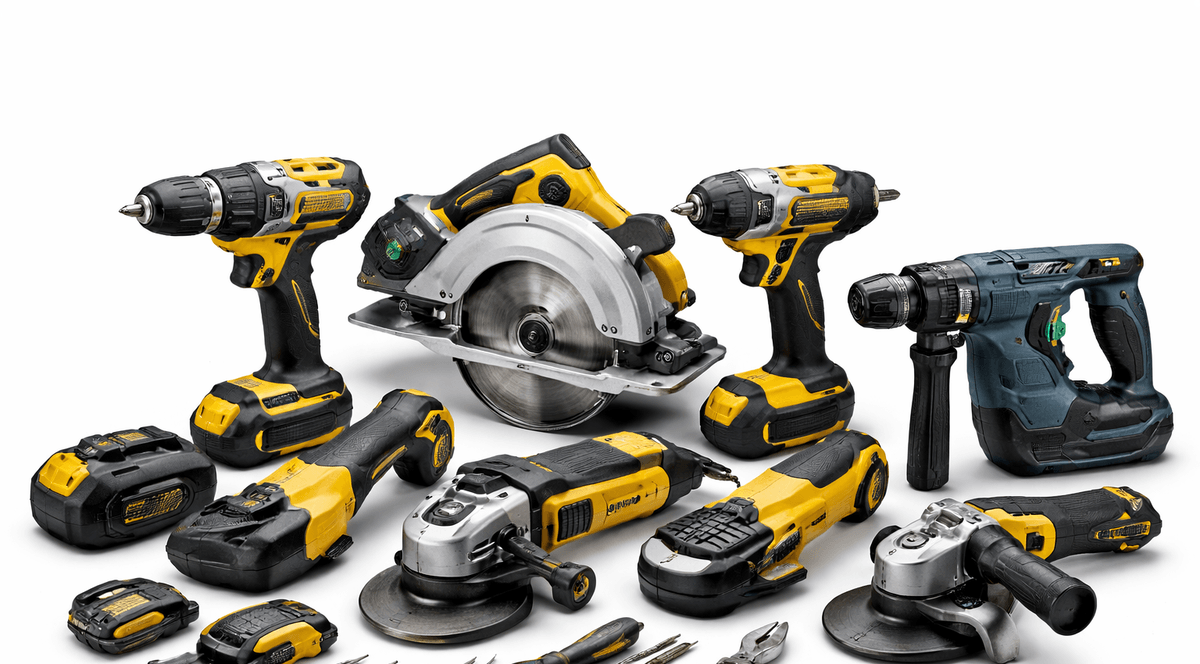
Power tools have become essential equipment on modern job sites and in home workshops. From cordless drills to circular saws, their effectiveness is defined by power tool motor efficiency the ability to convert energy from a wall outlet or battery into useful motion and force.
Understanding how these machines transform electrical energy into mechanical work is important for anyone aiming to use their equipment safely, efficiently, and with confidence.
A clear grasp of the core components and operating principles helps users make better decisions, improve performance, and maintain equipment more effectively over time.
What Happens Inside a Power Tool: The Electrical to Mechanical Process
When a power tool is connected to mains power or fitted with a battery, electrical energy begins a controlled journey through several internal components before any visible motion occurs. This process involves converting electrical energy into mechanical movement, transmitting that movement through internal systems, and delivering usable force at the working end of the tool. Although designs vary across tool types, the underlying principle remains consistent across most modern power tools.
A simplified overview of this process includes:
Electricity Source: Electrical energy is supplied either through mains power (AC) or from a rechargeable battery (DC).
Electric Motor: The motor converts electrical energy into rotary mechanical motion.
Transmission System: Internal gears or belts adjust speed and torque to suit the tool’s function.
Tool Output: Mechanical motion is delivered as practical action such as drilling, cutting, grinding, or hammering.
This core system is shared by a wide range of tools, from compact handheld drills to larger stationary equipment such as miter saws and workshop machines. Understanding this process helps users operate tools more safely, maintain them properly, and select the right equipment for specific tasks.
Breaking Down Electric Motors in Power Tools
All modern power tools rely on an electric motor as the core component that drives movement and performance. The motor is responsible for generating the motion that powers the tool’s functional end, whether that involves spinning a drill bit, turning a saw blade, or driving a grinding wheel. Understanding the role of the motor helps clarify how power tools deliver consistent and reliable mechanical performance.
Types of Electric Motors
Most consumer and professional power tools use one of two primary motor types:
Brushed Motors:
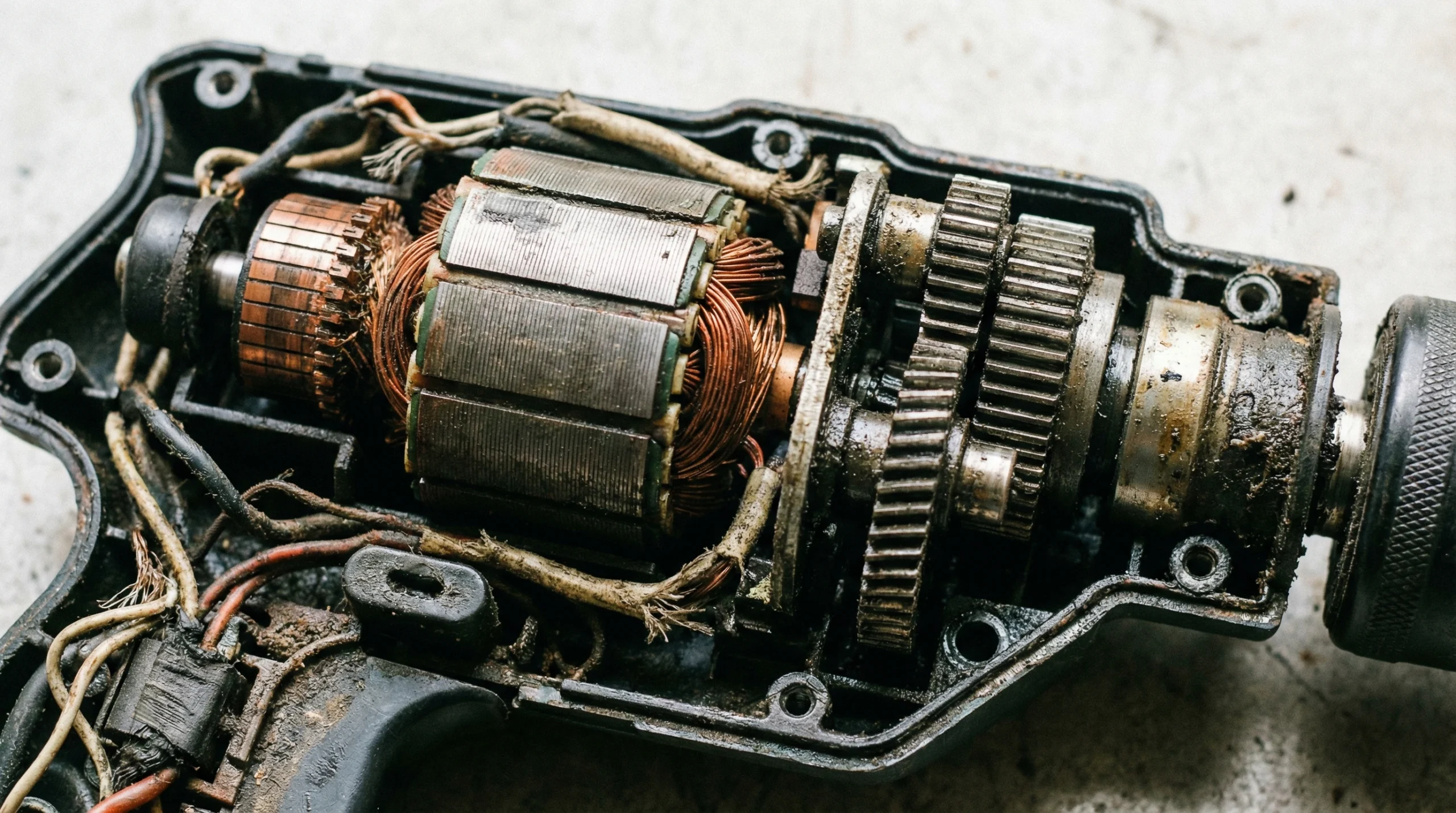
Traditional brushed motors are widely used in many standard power tools. They operate using carbon brushes and a rotating commutator to direct electrical current and maintain continuous shaft rotation. These motors are generally cost-effective, straightforward in design, and suitable for a wide range of basic and mid-level applications.
Brushless Motors:
Brushless motors use electronic control systems instead of physical brushes to manage current flow. This design improves efficiency, reduces internal friction, and extends overall motor lifespan. Brushless technology has become increasingly common in cordless power tools across the United States, Australia, New Zealand, and Europe due to smoother performance, lower maintenance requirements, and improved energy efficiency.
How Electric Motors Work
Within any electric motor, electrical energy flows through coils of wire, generating a magnetic field. This magnetic field interacts with permanent magnets or electromagnets inside the motor housing. The resulting electromagnetic force causes the motor shaft to rotate, producing the mechanical motion needed to operate the tool. When a tool is activated, an electrical circuit is completed, energizing the motor and initiating rotation at the output end.
The design and quality of motor components directly influence torque (rotational force), speed, and overall tool performance. Manufacturers often fine-tune these elements to match specific applications, balancing speed and power to suit tasks such as drilling, cutting, grinding, or fastening.
The Gear Train: Shaping Mechanical Force for the Task
Once the motor generates rotational motion, that movement is transferred through a gear system before reaching the working end of the tool. Gear trains are used to adjust speed and torque to match the intended application. By increasing torque or modifying rotational speed, gears ensure that mechanical force is delivered in a controlled and practical way for different materials and working conditions.
Kinds of Gear Systems
Power tools use different types of gear systems to adjust speed and torque before energy reaches the working end of the tool. Each gear type is selected based on the intended application, required force, and desired operating smoothness.
Spur Gears:
Commonly used in simple drills, saws, and screwdrivers, spur gears provide straightforward transmission of motion and are reliable for standard tool functions.
Planetary Gears:
Often found in cordless drills and drivers, planetary gear systems deliver higher torque within a compact space. This design allows tools to remain lightweight while still producing strong rotational force.
Belt Drives:
Belt-driven systems are sometimes used in sanders and similar equipment where smoother and quieter operation is beneficial. These systems help reduce vibration and improve user control during extended use.
By selecting different gear combinations, tool designers can tailor performance for either high torque or high speed, depending on the intended task. Multi-speed selectors found on many drills and drivers operate by adjusting the gear ratio inside the gearbox. The quality of gears and transmission components also affects tool longevity, smoothness of operation, and overall vibration levels during use.
From Gearbox to Bit: Final Power Delivery and Special Mechanisms
After speed and torque are adjusted through the gearbox, mechanical power is delivered to the working end of the tool. Different tool types convert this rotational energy into specific forms of motion suited to particular tasks.
Rotary Tools:
Drills, circular saws, and grinders use direct rotational motion to perform cutting, drilling, grinding, and shaping operations.
Reciprocating Tools:
Jigsaws and reciprocating saws convert rotary motion into controlled back-and-forth movement, enabling cutting through materials such as timber, metal, and plastics.
Hammer Action:
Hammer drills and rotary hammers incorporate internal cam or impact mechanisms that add rapid percussive blows to rotational movement. This combination improves efficiency when working with masonry and concrete.
Manufacturers design these systems to maximize performance while minimizing vibration and maintaining reliability. The motion experienced at the bit or blade results from a carefully controlled chain of energy conversion and transmission. Advances in motor control, materials, and internal mechanisms continue to improve performance, efficiency, and user control across modern power tools.
Key Factors That Affect Power Tool Performance
Several technical and design factors influence how effectively a power tool converts electrical energy into usable mechanical work.
Voltage and Current:
Higher voltage in cordless tools or higher current in corded tools can increase potential output. However, performance depends on the complete system, not voltage alone.
Motor Efficiency:
Efficient motor designs, particularly brushless systems, reduce energy loss through heat and friction. This allows more input energy to be converted into usable motion and torque.
Tool Design and Materials:
High-quality gearboxes, durable bearings, and low-friction components reduce energy loss and improve overall efficiency. Strong but lightweight materials help maintain performance while reducing user fatigue.
Professionals across the United States, Australia, New Zealand, and Europe consider these factors when selecting tools for demanding applications. Efficient energy conversion often results in faster work, improved consistency, and reduced strain during extended use.
Choosing Between Corded and Cordless Tools
Both corded and cordless power tools rely on the same fundamental process of converting electrical energy into mechanical motion, but the power source affects performance characteristics and usage flexibility.
Corded Tools:
Corded tools provide a continuous power supply and are well suited to workshop environments or locations with reliable electrical infrastructure. They are often preferred for sustained high-load applications.
Cordless Tools:
Cordless tools offer mobility and convenience, making them ideal for remote work sites and quick tasks. Advances in battery technology and brushless motors have significantly improved the power and runtime of cordless systems, allowing many models to match the performance of corded tools in common applications.
Selecting between corded and cordless options depends on work environment, mobility requirements, and the frequency of heavy-duty use.
Practical Troubleshooting: When Tools Lose Power
Over time, power tools may experience reduced performance due to component wear or maintenance issues. Common causes include worn brushes in brushed motors, degraded batteries, or worn gear components that reduce energy transfer efficiency.
Simple maintenance steps such as battery replacement, cleaning dust from ventilation areas, and checking moving parts can often restore performance. Unusual noise, excessive heat, or noticeable power loss may indicate the need for inspection or servicing. Regular maintenance and proper storage help prevent many common performance issues and extend overall tool lifespan.
Real-World Examples of Power Tool Technology
Different power tools apply electrical-to-mechanical conversion in ways that suit specific tasks and working environments.
Drill/Drivers:
Compact and versatile, modern drill/drivers often use brushless motors and multi-speed gearboxes to balance torque and speed for drilling and fastening across various materials.
Angle Grinders:
Designed for cutting and grinding, angle grinders typically use high-speed motors and direct-drive systems to deliver consistent rotational performance.
Reciprocating Saws:
Common in demolition and renovation work, reciprocating saws convert rotational energy into a powerful push–pull cutting motion suitable for pipes, framing, and structural materials.
Manufacturers continue refining these systems to improve efficiency, durability, and safety. Ongoing advancements in motor design, battery technology, and internal mechanisms contribute to higher-performing tools across construction, workshop, and fabrication industries.
FAQ : Frequently Asked Questions
- Why do some cordless tools now perform as strongly as corded tools?
Advances in lithium-ion battery technology and brushless motor systems have significantly improved power delivery and efficiency. Many modern cordless tools can now match or exceed corded performance for tasks such as drilling and fastening. - Is higher voltage always better in cordless tools?
Higher voltage can indicate greater potential output, but overall performance depends on motor efficiency, gearing, and tool design. A well-engineered mid-voltage tool can often perform as effectively as a higher-voltage model for many applications. - How can tool lifespan be extended?
Regular cleaning, proper battery storage, scheduled maintenance of moving components, and adherence to manufacturer guidelines help maintain performance and extend service life. Tools used in dusty or demanding environments should be inspected more frequently.
Final Thoughts on Power Tool Energy Conversion
Power tools operate by converting electrical energy into controlled mechanical motion that performs practical work. Understanding motor function, gear systems, and energy transmission helps users operate tools more safely, choose appropriate equipment, and maintain consistent performance. As technology continues to evolve, modern tools deliver greater efficiency, improved durability, and enhanced control across a wide range of construction, workshop, and fabrication applications.
Next Recommended Article
Understanding Torque, RPM, and Voltage in Power Tools
Further References & Readings
IEEE (Institute of Electrical and Electronics Engineers): Principles of Electromechanical Energy Conversion.
Department of Energy (DOE): Continuous Improvement for Industrial Motor Systems.
ISO Standard: ISO 12100 : Safety of machinery – General principles for design.
If you’re searching for trustworthy tool reviews or want tips on the latest releases in the US, Australia, New Zealand, or Europe, keep checking back. We will continue to share everything we learn from the job site, the workshop, and conversations with other seasoned users.
Editorial Disclaimer
This content is for educational purposes only. Always follow manufacturer guidance and safety procedures.