How Can You Stop Common Tool Failures on Construction Sites? Here Are 11 Must‑Know Principles
Before diving into the full solution, let’s explore some essential basics so the answer becomes clear by the end of this guide. Most construction tool failures develop gradually before they become visible breakdowns.
In my experience and from reviewing failure reports with technicians and suppliers, the root causes usually trace back to heat buildup, improper accessory use, and inconsistent handling practices.
Overheating is one of the leading contributors to motor and electronic failure. Forcing cuts, running tools continuously beyond their intended duty cycle, and blocked cooling vents all raise internal temperatures.
Allowing tools to rest periodically and maintaining clean airflow significantly reduces thermal stress.
Using incorrect or worn accessories accelerates mechanical wear.
Dull drill bits and damaged discs increase cutting resistance, forcing motors and gearboxes to work harder. Matching accessories to material type and replacing worn components early protects both performance and safety.
Electrical abuse causes hidden damage. Extension cords that are undersized create voltage drop, increasing motor load and heat generation. Exposed wiring, loose plugs, and moisture exposure introduce risk of short circuits and corrosion. Proper cord selection and regular inspection prevent these failures.
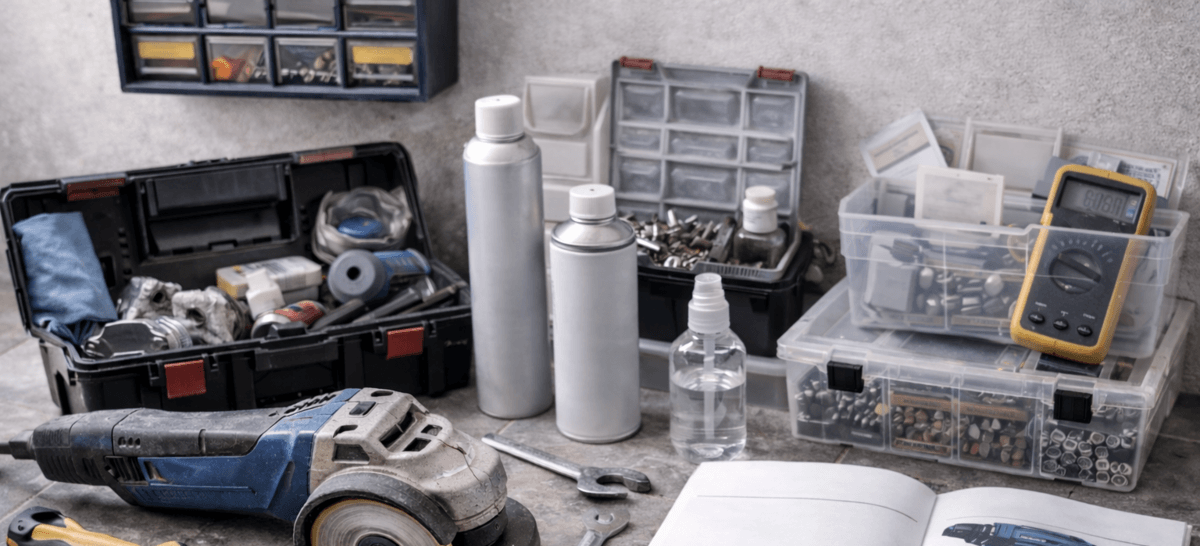
Improper storage shortens service life. Leaving tools exposed to rain, dust, or impact damage compromises seals and alignment. Storing batteries in extreme temperatures degrades capacity and output consistency. Organized storage protects both tools and accessories.
Operator habits influence tool longevity more than many realize. Maintaining steady pressure, avoiding side loading, and respecting torque limits reduces mechanical strain. Small discipline improvements prevent most avoidable breakdowns.
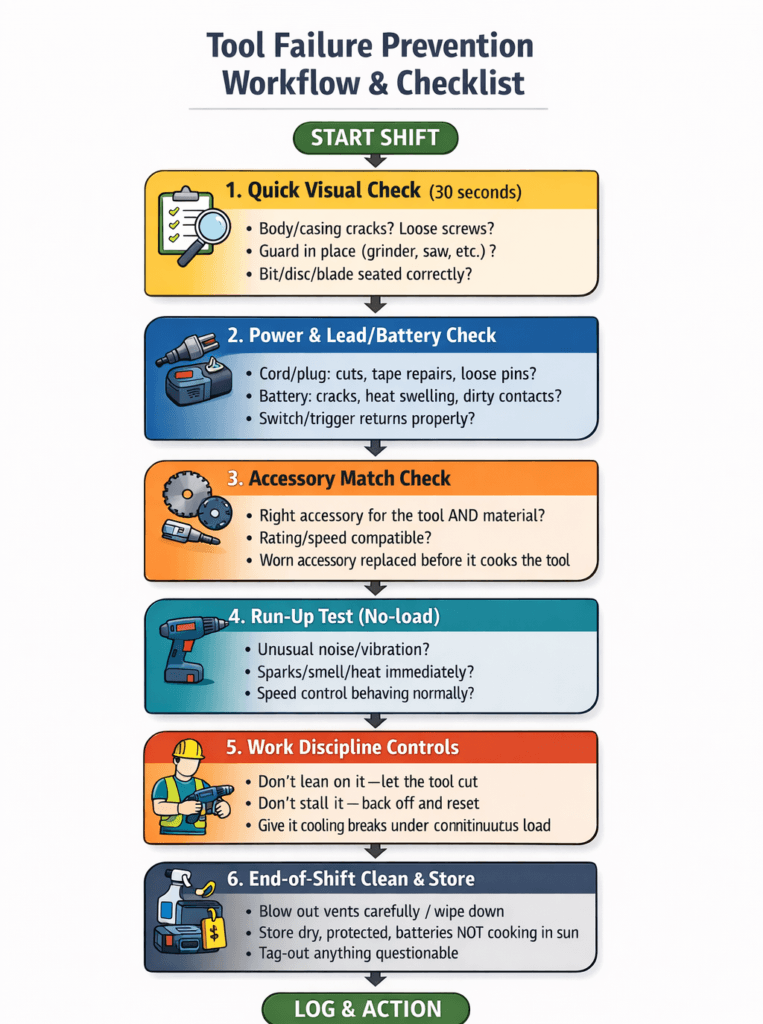
As per the experience, thorough understanding from industry experts and as per mentioned in OSHA ,HSE, Safe work Australia, WSH(Singapore) basic checklist version below
Daily (Operator – 2 minutes per tool)
- Tool body solid (no cracks/loose parts)
- Guards/handles fitted where required
- Cord/plug OK (no cuts, no taped repairs), or battery OK (no swelling/heat damage)
- Accessory is correct type and manufacturer-intended (no “it fits so it must work” nonsense)
- No-load run sounds normal; no excessive vibration/heat
Weekly (Supervisor/Lead hand : 10-20 minutes)
- Formal visual inspection of cords, plugs, strain reliefs, casings
- Replace worn accessories in bulk (bits/discs/blades) before they cause stalls/overheat
- Check storage/charging area (ventilation, dry, not in direct sun)
If any “red flag” shows up
-Remove from service immediately (tag it, don’t “just finish this cut”)
-Repair by competent person / authorized service (don’t DIY unsafe electrical fixes)
Preventing Common Tool Failures on Construction Sites
Electrical Tool Failures
- Case: Cordless drill shutdowns due to moisture ingress – caused by exposure to rain during slab work; resolved by enforcing IP‑rated storage boxes and mandatory end‑of‑shift wipe‑down routines.
- Case: Angle grinder motor burnouts from overloaded circuits – traced to multiple high‑draw tools on a single temporary power board; prevented by load‑balanced distribution boards and scheduled electrical inspections.
- Case: Damaged extension leads causing intermittent tool failure – identified during pre‑start checks; prevented by adopting tagged-and-tested leads and quarterly replacement cycles aligned with regulator guidance.
Mechanical Tool Failures
- Case: Impact driver bit fractures during structural framing – linked to use of low‑grade bits; resolved by switching to hardened alloy or carbide‑tipped bits and enforcing torque‑matched settings.
- Case: Circular saw blade warping under continuous load – caused by overheating during long rip cuts; prevented by using vented blades, scheduled cooling intervals, and blade‑cleaning protocols.
- Case: Jackhammer piston wear from improper lubrication – traced to skipped maintenance cycles; resolved by implementing manufacturer‑specified lubrication intervals and logbook tracking.
Pneumatic Tool Failures
- Case: Nail gun misfires due to contaminated air lines – caused by moisture and debris in compressors; prevented by installing inline filters and daily tank drainage routines.
- Case: Air hammer power loss from hose micro‑leaks – identified through pressure‑drop testing; prevented by replacing hoses with reinforced, abrasion‑resistant models and adding hose‑routing guards.
Battery‑Powered Tool Failures
- Case: Rapid battery degradation on high‑duty sites – caused by continuous fast‑charging cycles; prevented by rotating battery sets, using manufacturer‑approved chargers, and maintaining temperature‑controlled charging stations.
- Case: Battery pack swelling from exposure to direct sunlight resolved by implementing shaded charging zones and insulated storage cases.
- Case: Tool shutdowns triggered by incompatible aftermarket batteries – prevented by enforcing OEM‑only battery policies and maintaining a verified procurement list.
Cutting & Grinding Tool Failures
- Case: Grinder disc shattering during concrete edge work – caused by using a disc not rated for RPM; prevented by mandatory RPM‑rating checks and color‑coded disc storage.
- Case: Reciprocating saw blade snapping during demolition – linked to incorrect TPI selection; prevented by matching blade type to material density and using vibration‑reduction gloves to maintain control.
- Case: Wet saw pump failure during tile cutting – caused by clogged water lines; prevented by daily flushing routines and sediment‑filter installation.
Lifting & Handling Tool Failures
- Case: Hoist motor overheating during repetitive lifting cycles – prevented by enforcing duty‑cycle limits and installing thermal‑cutoff protection.
- Case: Chain block jamming due to rust contamination – resolved by adopting weather‑proof covers and scheduled lubrication aligned with manufacturer specifications.
Measurement & Layout Tool Failures
- Case: Laser level drift caused by tripod vibration – prevented by using vibration‑damped tripods and conducting calibration checks before each shift.
- Case: Tape measure recoil failure from debris intrusion – resolved by implementing end‑of‑day cleaning routines and using construction‑grade sealed housings.
Environmental & Site‑Condition‑Driven Failures
- Case: Tool corrosion on coastal construction sites – prevented by using corrosion‑resistant coatings, silica‑gel storage, and weekly anti‑rust treatments.
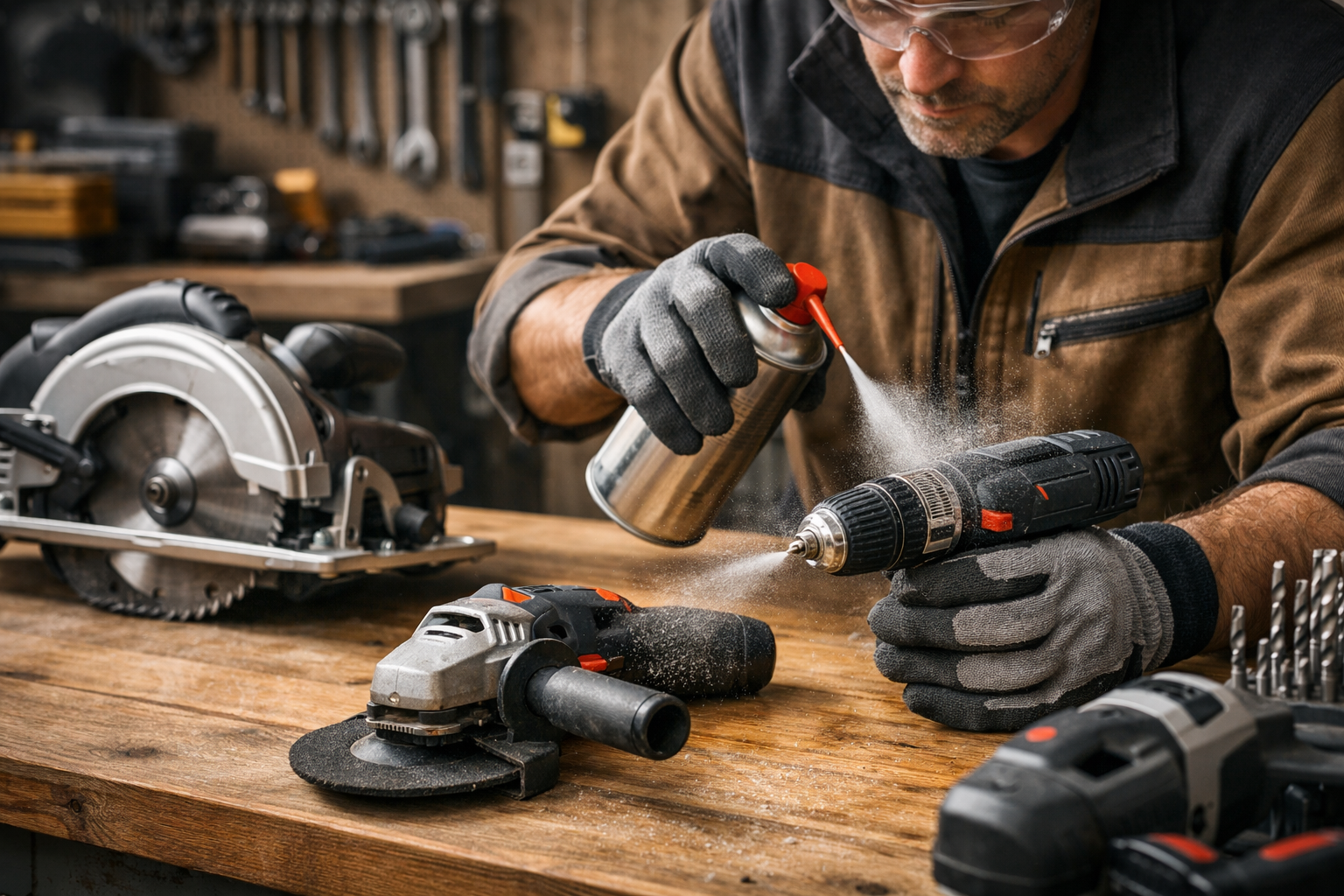
- Case: Dust‑induced motor clogging on demolition sites – resolved by adopting HEPA‑rated dust extraction and sealed‑motor tools designed for high‑particulate environments.
- Case: Cold‑weather battery shutdowns during winter builds -prevented by insulated tool storage and pre‑warming batteries before use.
Human‑Factor‑Driven Failures
- Case: Premature tool wear from incorrect torque settings – prevented by training workers on torque charts and using tools with digital torque control.
- Case: Tool overheating due to continuous operation without rest cycles – resolved by implementing duty‑cycle signage and supervisor‑monitored rotation schedules.
- Case: Fastener jams caused by incompatible consumables – prevented by standardizing consumables and maintaining a site‑wide compatibility matrix.
Procurement & Quality‑Control Failures
- Case: High failure rates from low‑quality imported tools – prevented by adopting procurement standards requiring certification, warranty support, and verified supplier history.
- Case: Counterfeit blades and bits entering supply chains – resolved by sourcing through authorized distributors and using traceable packaging with batch numbers.
11 Quick Essential Prevention Principles for Common Tool Failures on Construction Sites
- Use tagged, tested, and insulated electrical tools to prevent faults caused by damaged leads, moisture, and overloads.
- Ensure all electrical tools run on load‑balanced circuits with GFCI/RCD protection to avoid overheating and shutdowns.
- Match tools, blades, bits, and torque settings to material requirements to prevent mechanical stress and premature wear.
- Maintain clean, dry, filtered air systems for pneumatic tools to prevent misfires, pressure loss, and internal corrosion.
- Follow manufacturer‑approved charging, rotation, and storage routines to prevent battery degradation, swelling, and shutdowns.
- Use RPM‑rated discs, correct TPI blades, and dust‑controlled cutting setups to prevent shattering, snapping, and overheating.
- Operate lifting tools within duty‑cycle limits and maintain lubrication and corrosion protection to prevent hoist and chain failures.
- Calibrate measurement tools regularly and protect them from vibration, dust, and impact to prevent layout inaccuracies.
- Control site dust, moisture, temperature, and corrosion exposure to prevent environmental damage to motors, electronics, and metals.
- Provide skill‑based training on tool selection, load limits, and rest cycles to prevent misuse and operator‑driven failures.
- Source certified tools, genuine consumables, and compliant components to prevent failures caused by low‑quality or counterfeit products.
Preventing failure starts with awareness, correct usage, and routine care rather than reactive repair.
In my experience, most tool failures and near misses start with skipped checks, which matches SafeWork Australia’s & other sources guidance to confirm tools are in good working order before use. On real job sites, electrical faults and damaged leads can shorten tool life significantly, so structured maintenance routines such as those recommended by WorkSafe / Safe work / Osha for testing and maintaining equipment should be followed to ensure safe and reliable operation.
To keep your learning momentum going, check out the next recommended article it connects perfectly with what you’ve just read.
Below Sources & Further Reading would be beneficial:
- OSHA (USA):Hand and Power Tools (OSHA 3080 PDF)
Covers the fundamentals that prevent failures: use the right tool, inspect before use, maintain tools, follow manufacturer instructions, and keep tools in good condition. - HSE (UK):Maintaining portable electrical equipment (HSG107)
Gives a practical maintenance system: user checks + formal visual inspections + testing where needed-exactly the stuff that prevents cord/plug/battery failures on sites. - SafeWork Australia :Safety rules for using power tools
- Workplace Safety and Health Council (Singapore)-WSH Guidelines on Safe Use of Machinery (PDF)
- ASM International: Handbook of Case Histories in Failure Analysis-authoritative engineering case studies covering mechanical, material, and operational failures.
- IEEE Xplore: Electrical Tool Failure & Overload Case Studies – peer‑reviewed research on electrical faults, insulation breakdown, and circuit overloads.
- Hilti: Tool Service Data, Failure Analysis & Maintenance Protocols – high‑reliability documentation used globally on commercial construction sites.
- Milwaukee Tool :REDLINK™ Overload Protection & Failure Prevention Data – official engineering insights into battery, motor, and electronics failures.
Editorial Disclaimer
This article is for educational purposes only, and readers should always refer to the manufacturer’s official specifications and safety guidelines for exact application requirements.